
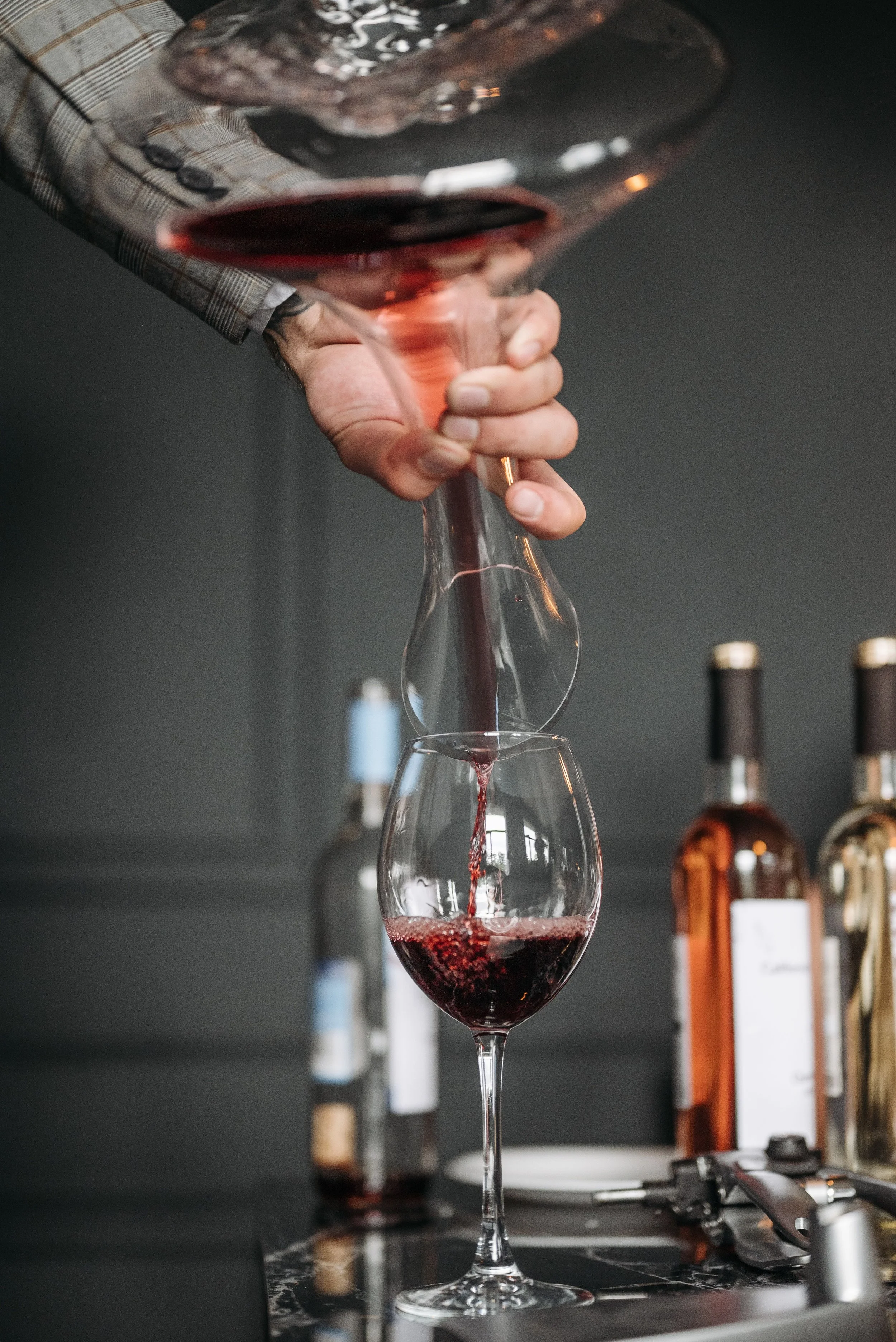
Maybe we've been asking the wrong question.
The wine industry is full of information that's been repeated for so long that we rarely stop to ask if it's actually true.
And I've been guilty of it too.
For years, I said decanting softens tannins.
But when I started digging into the research, I realized the answer is much more interesting.
I Was Decanting Before I Knew What Decanting Was
Long before I worked in wine, I was a wedding planner at the Miller Lash House at the University of Toronto.
I had a little money-saving tip for brides. There was an inexpensive Sangiovese I would recommend, and I'd tell them:
"Pour it into a glass jug about 30 minutes before serving."
I didn't know it then, but I was telling them to decant.
I'd be sitting at my desk after the wedding and get a call:
"That worked! People complimented the wine"
So I've been Team Decanting for a long time.
But why did it work?
Does Decanting Actually Soften Tannins?
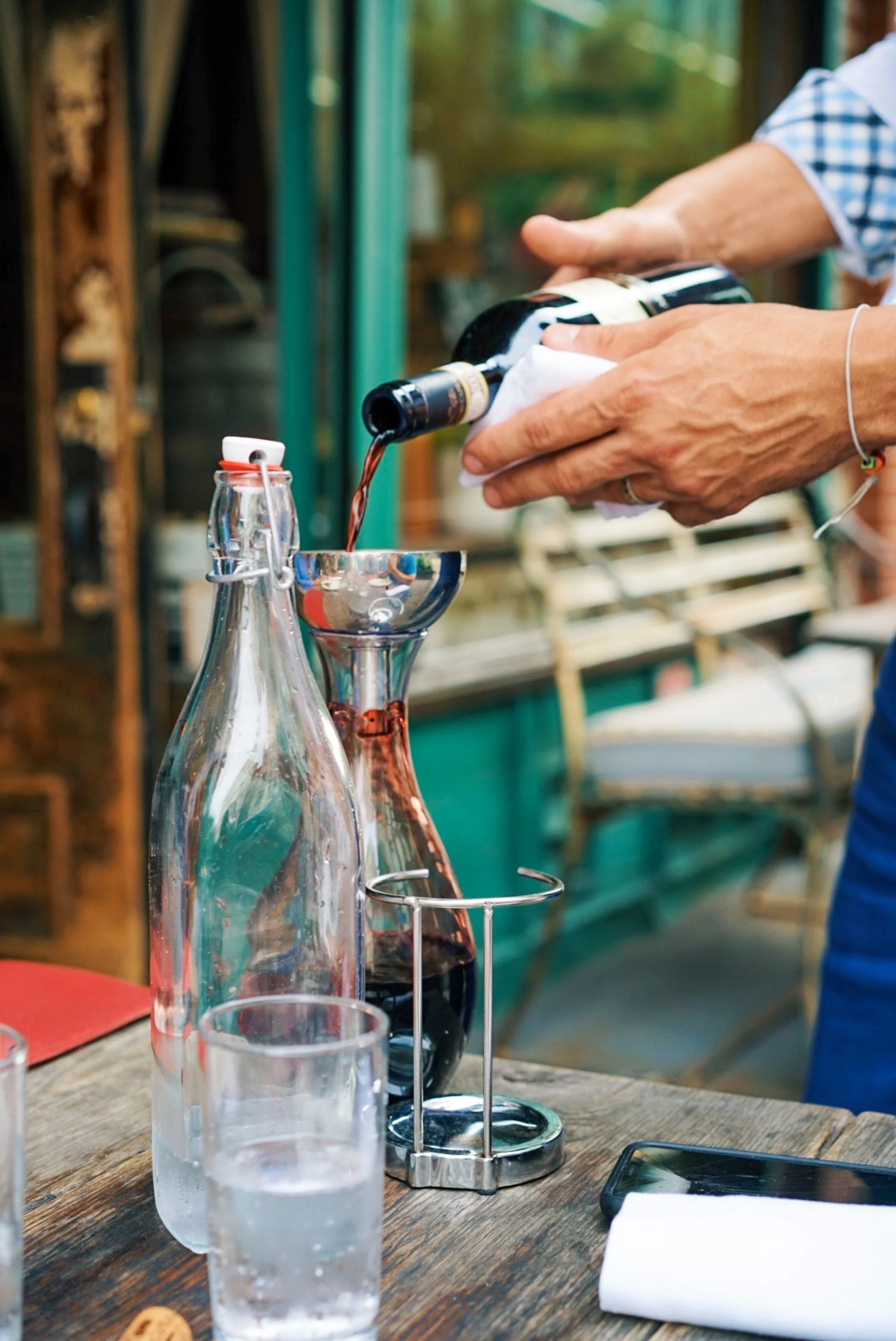
This is where it gets interesting.
A 2012 study published in the Journal of Separation Science measured 20 organic acids and polyphenols in red wine before and after decanting. Researchers found that concentrations of most of the compounds they examined decreased after decanting, with longer duration, higher temperatures, and greater light exposure intensifying the changes.
So there is evidence that measurable chemical changes happen.
But that doesn't necessarily mean the explanation is simply "oxygen softens tannins."
Wine chemist Dr. Andrew Waterhouse at UC Davis has studied oxidation, micro-oxygenation, wine colour and tannins. His research notes that the effects of smaller amounts of oxygen on tannins can be relatively small, with more significant changes occurring at higher oxygen levels.
There's another important part of the equation: aroma.
Sulfur-containing volatile compounds can create unwanted aromas in wine. UC Davis notes that increased exposure of a wine's surface to air can help some sulfur volatiles dissipate.
So perhaps what we're experiencing after decanting isn't simply softer tannins.
Perhaps we're experiencing a more expressive wine.
And that got me thinking about breathwork.
What Breathwork Has to Do With Wine
Before meals, especially when life feels busy or overwhelming, I often pause for a minute of box breathing.
Box breathing is simple: breathe in for four counts, hold for four, breathe out for four and hold for four.
Another technique I like is 4-7-8 breathing: inhale for four, hold for seven and exhale for eight. Dr. Andrew Weil teaches the technique as four breathing cycles, emphasizing the ratio rather than the absolute number of seconds.
Slow, controlled breathing can influence the autonomic nervous system, including parasympathetic activity associated with rest and recovery.
That's why I like doing it before I eat or taste wine.
The food hasn't changed.
The wine hasn't changed.
But the breath changes how I experience the food and wine.
I'm calmer. I'm more present. I'm paying attention to aromas, textures and flavours I might otherwise rush past.
And I think decanting is similar.
Maybe It's About Expression, Not Tannins
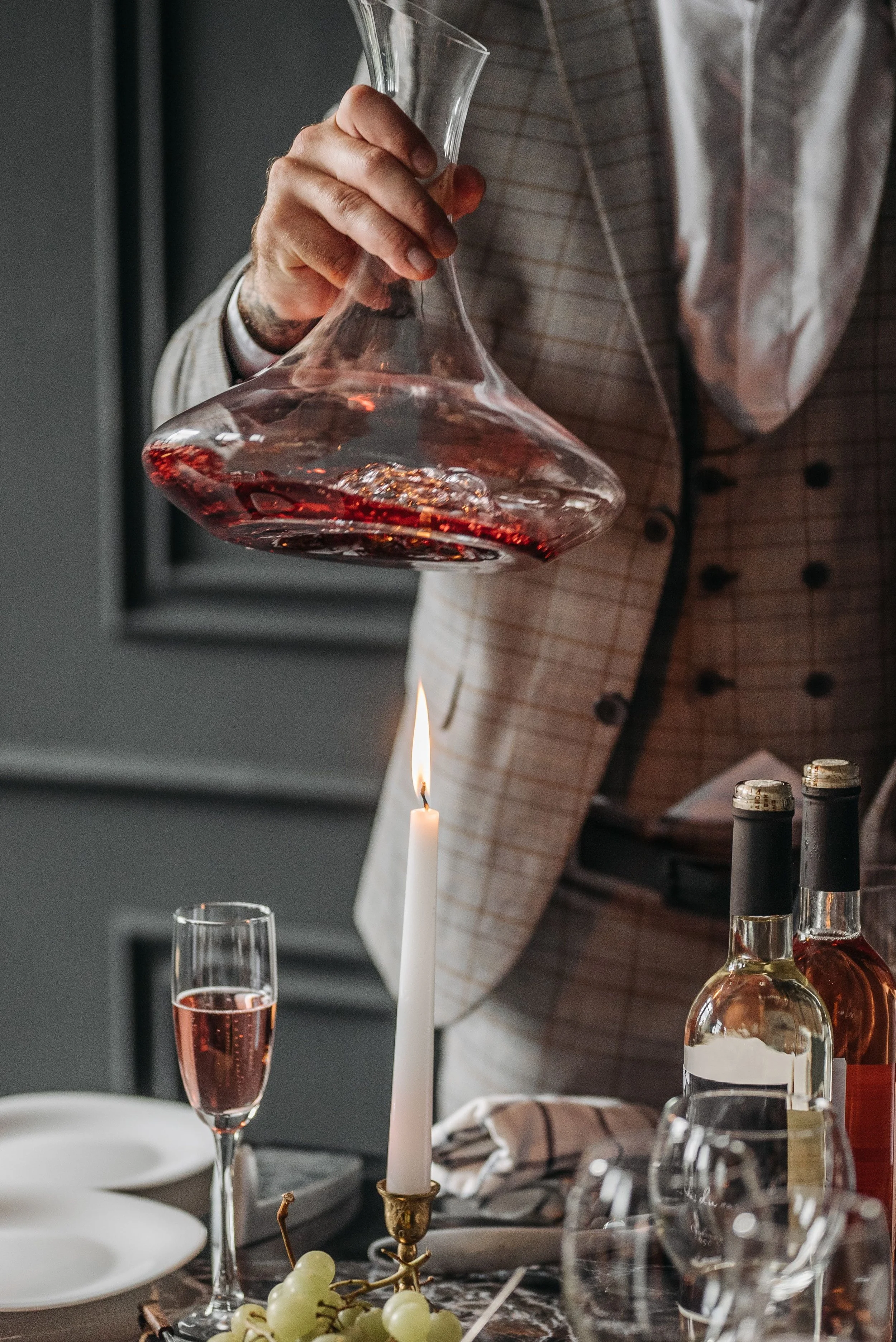
We already accept the importance of air elsewhere in food and beverage.
The pour-over coffee method is often considered the gold standard, and fluid dynamics research from the University of Pennsylvania shows that the most efficient brewing technique relies on a slow, high pour using a gooseneck kettle to introduce more air, improving extraction, flavour, and strength while using fewer coffee grounds.
Full disclosure, I’m still a French press girl, but I am thinking of switching to pour-over.
With wine, even if decanting isn't dramatically changing its tannin chemistry, it can change its aromatic expression and therefore how we perceive what's in the glass.
Aroma is an enormous part of flavour.
So I've replaced the question:
"Does decanting soften tannins?"
with:
"Does decanting make wine more expressive?"
For me, that's the better goal since we love tannins anyway. Check out our magazine article on the structure and why tannins are so great.
Give the wine room to breathe. Smell it when you first open it. Come back 30 minutes later. See what has disappeared, what has emerged and, most importantly, whether you enjoy it more.
I'm even going to try the infamous blender method and report back.
Because wine doesn't always need to become a different wine.
Sometimes it simply needs the conditions to express more of what's already there.
Decanters I Recommend
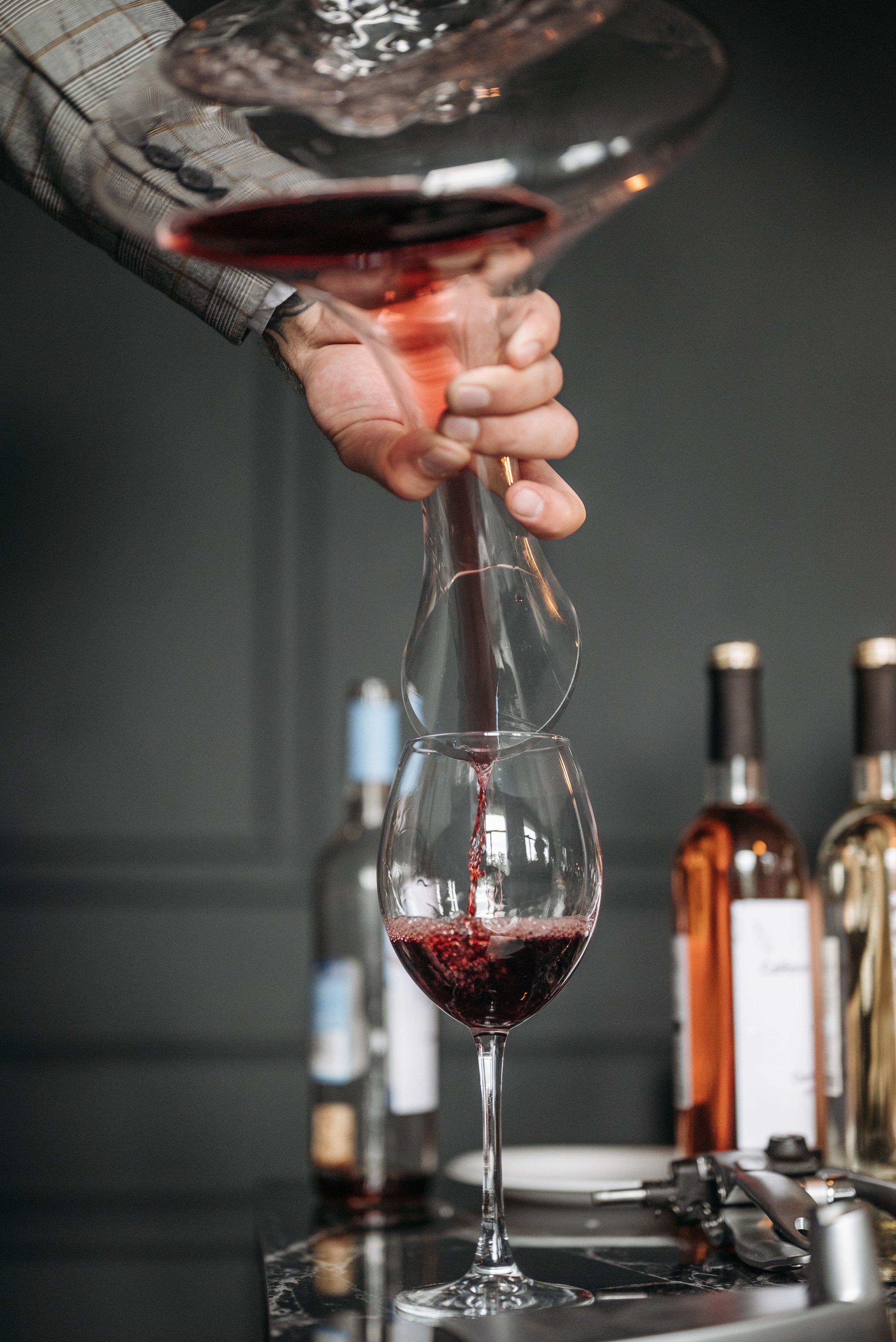
And here's the best part: you don't actually need an expensive decanter.
My entire wedding story started with a glass jug.
If you have a clean glass carafe or pitcher at home, start there. The goal is to give the wine more surface area and time.
But if you want a dedicated decanter, these are the ones I'd consider at different price points:
Under $25: Use a simple glass carafe
This is my true budget recommendation. Don't let not owning a "proper" decanter stop you. A basic glass carafe or wide-bottomed glass pitcher can be enough to start experimenting.
Around $70: Riedel Performance Decanter
A great entry point if you want a recognizable wine-glass brand without spending hundreds. Current listings are around $69 CAD.
Around $85: Peugeot Bouquet Decanter
A step up if you want something that feels beautiful enough to bring directly to the dinner table. Current Canadian listings are around $86 CAD.
Around $110: Riedel Cabernet Decanter
This is the classic shape most people picture when they think of a decanter. It's uncomplicated, elegant and practical. Current Canadian listings are around $110 CAD.
Around $200+: Zalto Axium Decanter
Zalto Axium Single Bottle Decanter
This is the splurge. If beautiful wine glassware is part of the pleasure for you, Zalto makes the decanter itself part of the experience. Current Canadian listings are around $225 CAD.
But my recommendation before buying any of them?
Do the experiment first.
Pour half your next bottle directly into a glass. Put the other half into whatever glass carafe you already own and leave it for 30 minutes.
Then taste them side by side.
Don't ask yourself whether the tannins are technically softer.
Ask:
Which wine is more expressive?
And then:
Which one do I actually enjoy drinking more?
That's ultimately the experiment that matters.